
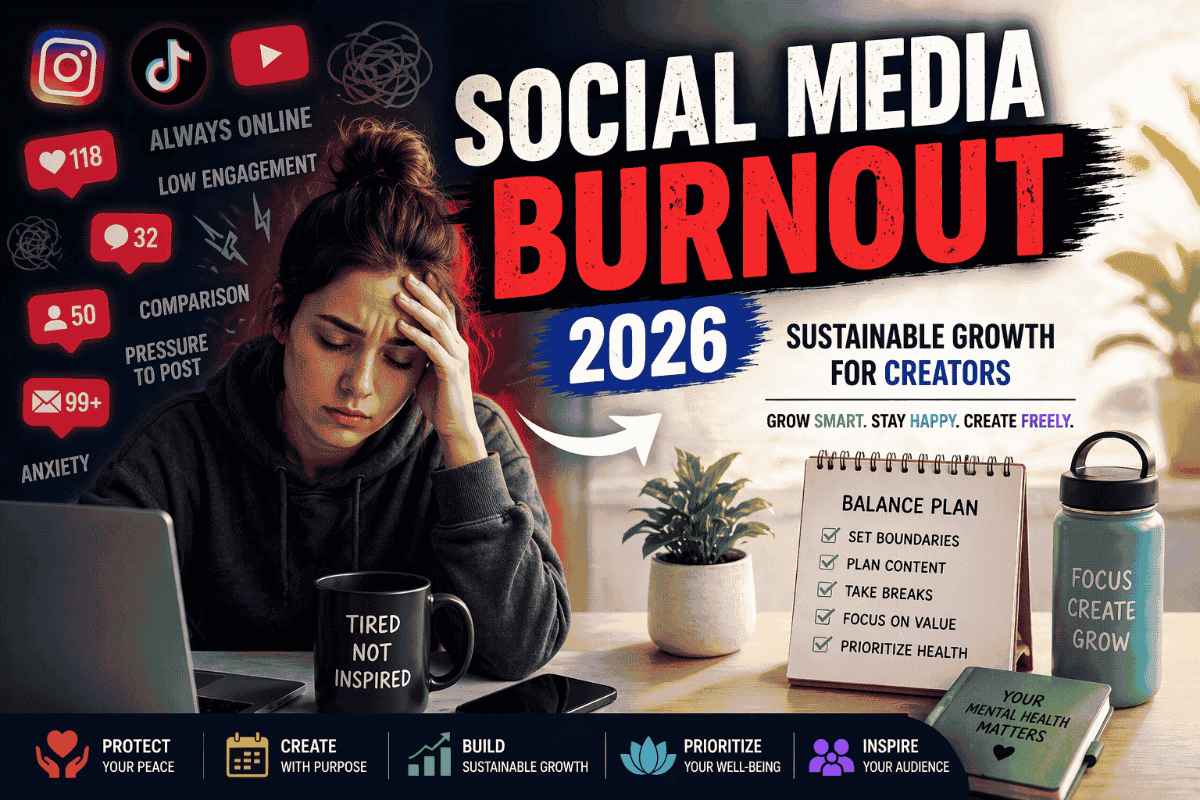
Introduction: The "Creative Winter" of 2026
In 2026, the digital landscape has reached a crossroads. We call it the "Great Creator Resignation." It isn't that the money has disappeared—the creator economy is actually more valuable than ever. It’s that the human cost of being "constantly online" has reached a breaking point.
From viral TikTokers to veteran YouTubers, the feeling is universal: the machine is always hungry, and it’s eating the creators alive. Social media burnout is no longer a "buzzword"; it is a professional hazard that we must manage with the same care we use to manage our finances.
What This Guide Solves
This isn't just another "put your phone away" lecture. This is a business strategy. We will break down how to identify the signs of exhaustion, how to build systems that work while you sleep, and how to maintain your growth without sacrificing your sanity.
What Is Social Media Burnout?
At its core, burnout is more than just being tired. It is a state of total emotional, physical, and mental exhaustion. For creators, it specifically involves a feeling of "creative bankruptcy"—where you have nothing left to give, and the act of creating feels like a chore rather than a joy.
Why 2026 is Different
In 2026, platforms use hyper-efficient AI to demand constant engagement. This creates a "hamster wheel" effect. If you aren't posting, you feel you are disappearing. This fear is the primary driver of burnout, but it is often based on a misunderstanding of how modern algorithms actually work.
Signs You’re Reaching the Breaking Point
1. Emotional Signs
The "Success Gap": You hit a milestone (like 100k followers) and feel absolutely nothing. Instead of celebrating, you just feel more pressure.
Resentment: You start seeing your audience as a demanding boss you can never please, rather than a community you love.
2. Behavioral Signs
The Scroll Paralysis: You spend hours "researching" competitors but never actually film anything yourself. This often leads to "comparison trap" anxiety. If you find yourself obsessing over what others are doing, you can learn how to analyze competitors' Instagram safely without letting their success trigger your own burnout.
Panic Posting: You alternate between posting five times a day in a manic burst and then vanishing for two weeks because you can’t face the camera.
3. Physical Signs
Digital Fatigue: Chronic headaches, blurry vision, and "tech neck" from hours spent editing on mobile devices.
Sleep Disruption: You find yourself checking comments at 3:00 AM or dreaming about the "perfect hook" for a video.
The Psychology of the Content Grind
The Dopamine Trap
Every "like" or "share" triggers a tiny hit of dopamine in your brain. It is exactly like a slot machine. When a post flops, your brain "crashes." To get that high back, you post again. Eventually, your brain’s reward system wears out, leading to a total shutdown.
The Comparison Trap
In 2026, we are competing against AI-enhanced "perfect" versions of reality. This creates an impossible standard. When you are constantly comparing your "behind-the-scenes" to someone else’s "highlight reel," burnout is inevitable.
How to Prevent Burnout (Actionable Strategies)
1. Build Systems, Not Just Content
The most successful creators don't work harder; they work smarter.
Content Batching: Stop filming every day. Pick one day a week to film 10-15 videos. Spend the rest of the week "off-camera." This allows your brain to stay in one "mode" at a time, reducing mental fatigue.
2. Strategic Anonymity and Detachment
Sometimes, the best way to protect your mental health is to step back from your own "creator persona." If you need to stay updated on trends or watch how other creators are handling certain topics without getting sucked into the "logged-in" experience, you can use an Instagram Story Viewer to watch stories anonymously. This lets you do your research and stay informed without triggering the notification loops that keep you tethered to your phone.
3. The "Slow Content" Movement
Quality beats quantity in 2026. One deeply researched, high-value video that people "save" for later is worth more than twenty "fast" clips that people scroll past.
Ask yourself: "Does this post provide real value, or am I just feeding the algorithm?"
4. Set Digital Boundaries
The Sunset Rule: No work-related social media after a certain hour (e.g., 7:00 PM).
The Separate Device Strategy: If your budget allows, have one phone for "work" (posting/editing) and one for "life" (family/friends).
Sustainable Growth Strategies
Focus on Long-Term Brand Building
Viral content is like a sugar rush. Personal branding is like a healthy meal. When people follow you for who you are rather than what trend you're doing, they will stick with you even if you take a week off.
Diversify Your Income
Financial stress is a huge part of burnout. If you rely solely on "Ad Revenue," you are a slave to the algorithm.
Digital Products: Sell your expertise once and earn forever.
Email Lists: Your email list is the only audience you truly own. If a social platform disappears, your business survives.
Mental Health Tips for All Ages
The Digital Detox
Once a month, take a "48-Hour Dark Period." Delete your social apps on Friday night and don't re-install them until Monday morning.
The Truth: Your reach will not die. Your followers will not forget you. But your brain will finally have a chance to reset its stress levels.
Mindset Shift: Detach Your Worth
Your value as a human being is not tied to your "View Count" on a Tuesday afternoon. If a video fails, it is a data point, not a personal failure.
Conclusion: Growth is a Marathon
In the race to reach a million followers, don't lose the person they are supposed to be following. In 2026, the most successful creators aren't the ones who post the most; they are the ones who last the longest. Build your systems, guard your peace, and remember: the world can wait 24 hours for your next post.
Frequently Asked Questions
What is social media burnout?
Social media burnout is chronic emotional and physical exhaustion caused by the constant pressure to create content and maintain an online presence.
Can I grow without posting daily?
Yes. In 2026, "Value-Based Content" (posts that are saved or shared) is prioritized over "Frequency-Based Content." High quality 2-3 times a week is often more effective than low quality daily posts.
How do I recover from creator burnout?
The first step is a "Digital Reset" for at least 48 hours. Long-term recovery requires building a "Content System" (batching and scheduling) to ensure you aren't always "on the clock."
Does the algorithm punish you for taking breaks?
While there may be a temporary dip in immediate reach, the algorithm actually rewards high-quality content. A rested, creative version of you will produce better content that will quickly recover any lost engagement.